

Inside LATAM’s High-Growth CTO Talent Pool: A Data-backed Look at the Region’s Pipeline
You’re getting a mapping of LATAM’s high-growth CTOs: where they’re based, how long they've been in the role, and what domains they come from.
We usually focus on the US and European markets or take a global perspective. This time, we wanted to do something different, so we mapped Latin America’s CTO talent pool.
LinkedIn counts +16.500 CTOs across LATAM.
For this piece, we narrowed the scope to leaders who work or have worked in high-growth businesses and currently hold a C-level role as CTO or CPTO. We reviewed 437 B2B and B2C companies with at least 1.000 FTEs, spanning fintech, travel tech, consumer internet, marketplaces, broader software, and large tech.
In total, we identified 126 technology executives – of which 94.4% are men – who meet our LATAM criteria: they’re either located in (1) LATAM or (2) the US/Canada but have a strong tie to the region through a completed degree in a LATAM country or at least two years of full-time work experience there.
So, what should you know about LATAM CTOs, their tenure, and their professional experience?
Where are LATAM CTOs/CPTOs located?
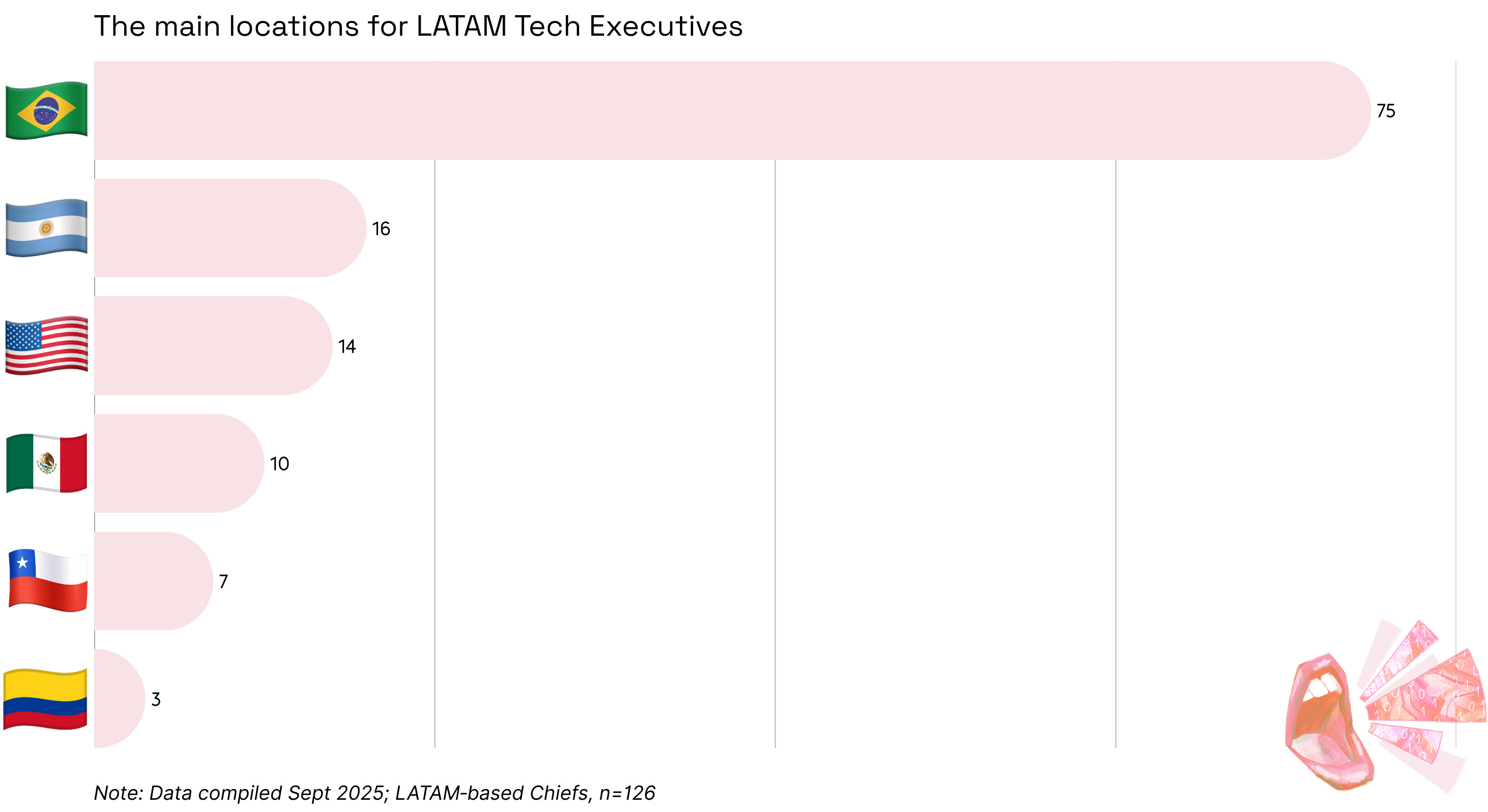
Almost 90% of these executives are based in Latin America, while the rest are mainly part of the US-based diaspora.
Unsurprisingly, Brazil tops the ranking. São Paulo alone accounts for 42 profiles, which matches the city’s outsized tech ecosystem. It’s the number one startup hub in Latin America and attracts the largest share of regional VC. Fintech is also a major driver - just look at Nubank - which helps concentrate senior tech leadership in the city.
The next cluster includes Argentina, Mexico, Chile, and Colombia, which are all regionally established hubs. Mexico City, Bogotá, Santiago, and often Buenos Aires consistently show up among the region’s leading ecosystems.

How long have they been in their role?
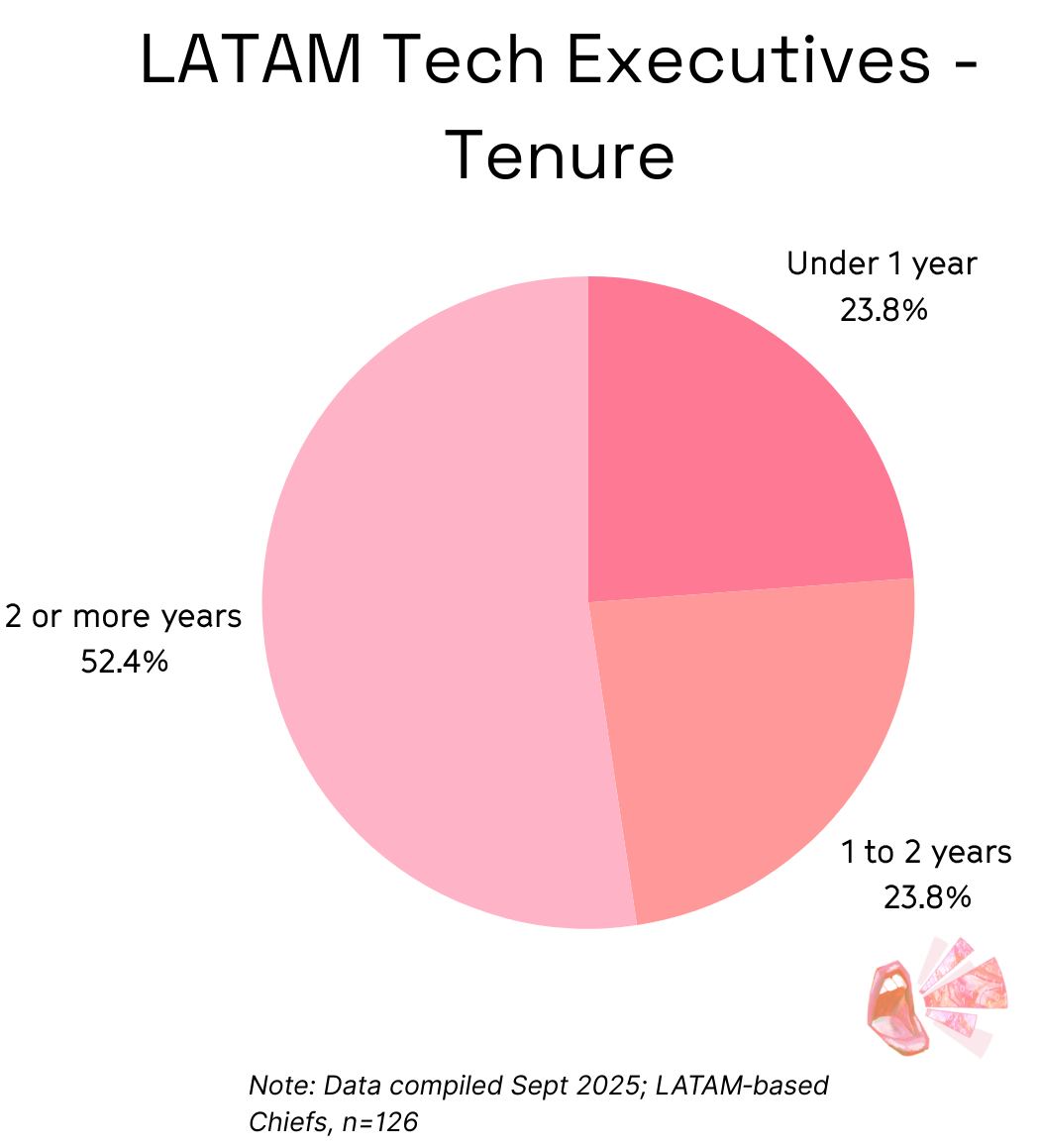
About a quarter of LATAM tech executives have been in their current role for less than a year, another quarter for 1–2 years, and just over half for 2+ years. That gives us a median of 2.3 years. In other words, most of them sit in that 1-3-year window – if you’ve been following our Substack for a while, you’ll notice that it is shorter than the CTO’s average tenure in growth-stage B2B SaaS companies in the DACH region.

But this short median tenure is easier to understand when you consider two factors:
(1) VC investments in Latin America fell from $16b in 2021 to $4b in 2023, which triggered restructurings and leadership turnover.
(2) Rapid digitalization across the region – even if most companies are still at the beginning or middle of this journey – fuelled a wave of new startups. That translated into more C-level seats and more movement, with senior leaders often leaving bigger tech companies to join smaller, faster-growing teams.
First time reading us? Good call. Don’t forget to subscribe to get notified whenever we publish new research.
An experienced talent pool
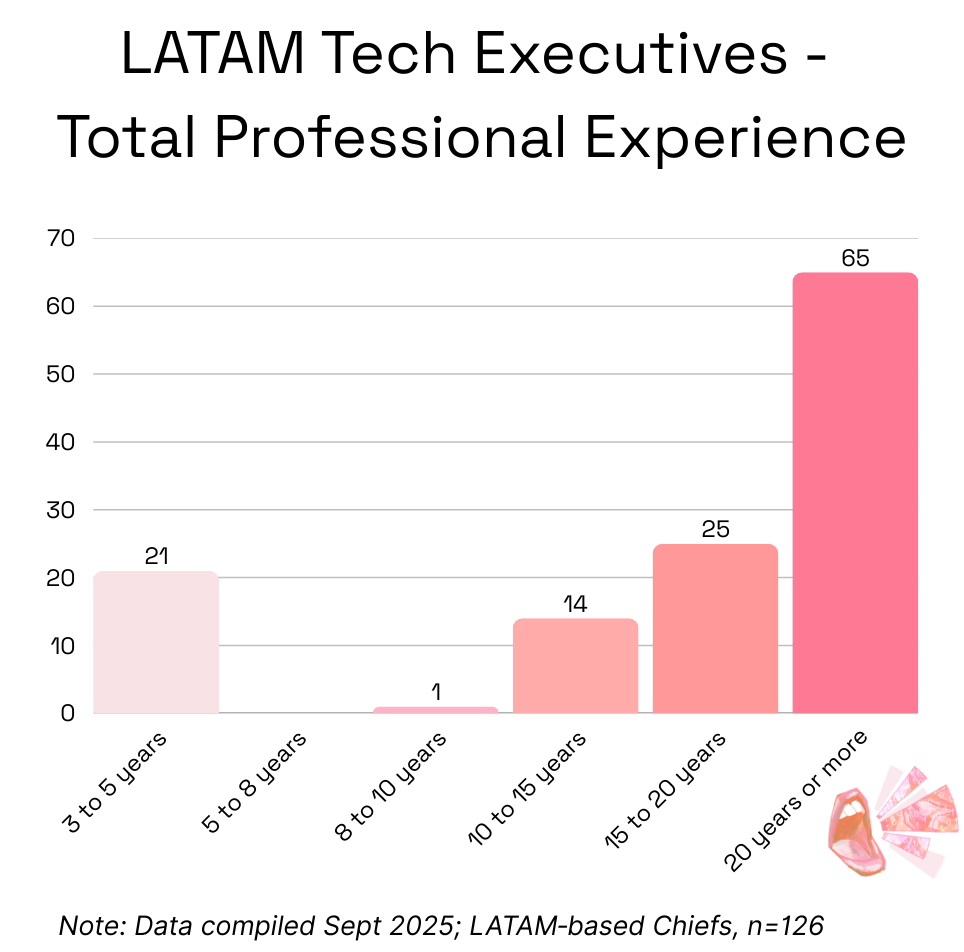
However, this pool is more experienced than the DACH B2B SaaS pool: over half have 20+ years of professional experience. Using their most recent role and overall career focus, we also found that 62.7% have a software background, while 37.3% have a marketplace background.
That split clearly mirrors the market: software is both the largest revenue driver and the fastest-growing component of LATAM tech. A big part of that momentum comes from fintech*, the region’s most mature startup sector, while e‑commerce’s smaller VC share helps explain fewer marketplace backgrounds.
*The sector has experienced an increase in software-led fintechs after the post-COVID digitalization.
How long does it take to reach the C-level title in LATAM?
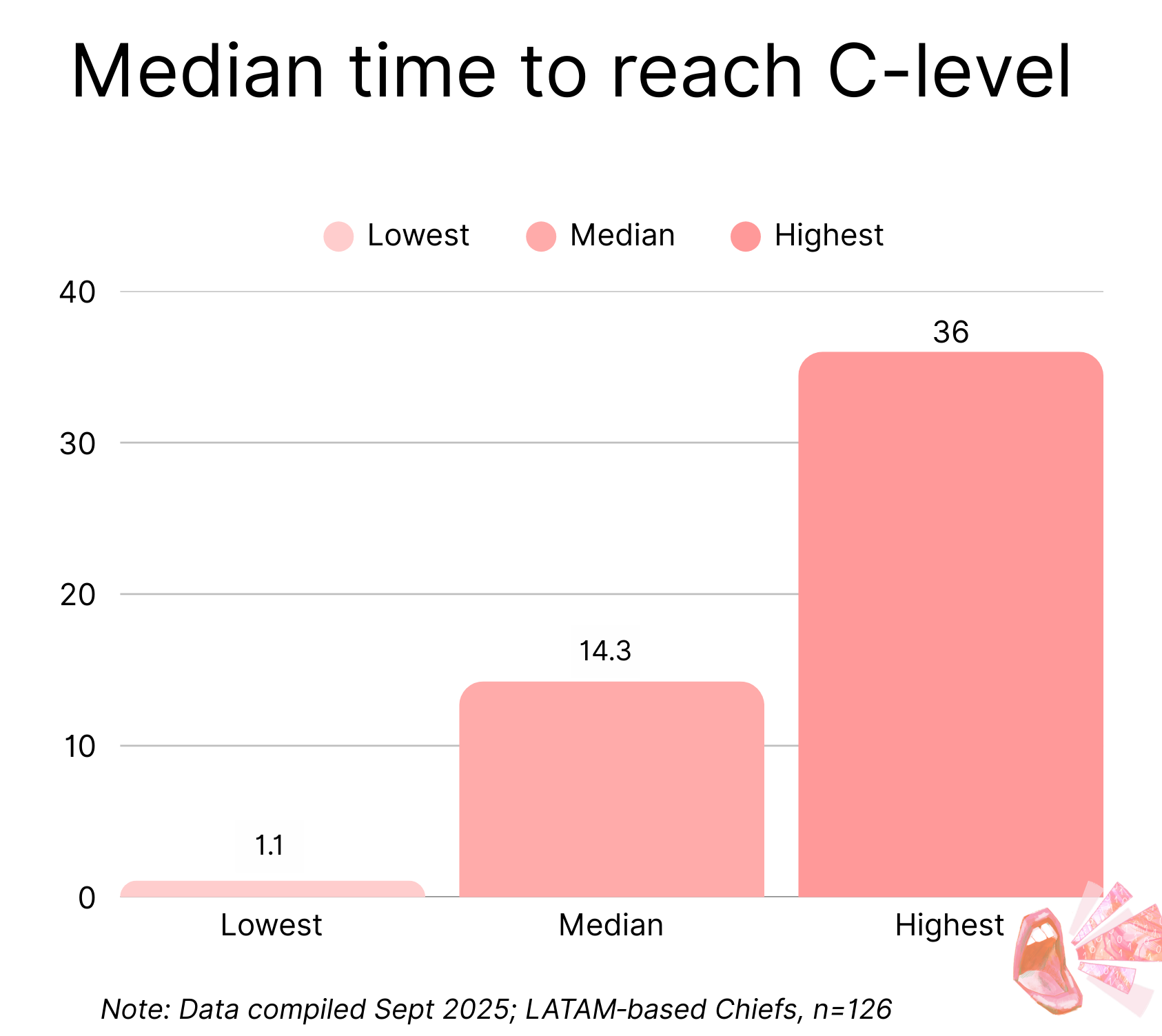
For these tech executives, it also takes a median of 14.3 years from the start of their careers to reach their first C-level role. And for most, it isn’t their first time: 58.7% have already held a similar role before.
All in all, that adds up to a median of 5.6 years of cumulative time in the C-suite. Put differently, it’s a pool of experienced leaders who know the region and understand its particular dynamics.
Which companies train the most rising LATAM CTOs?
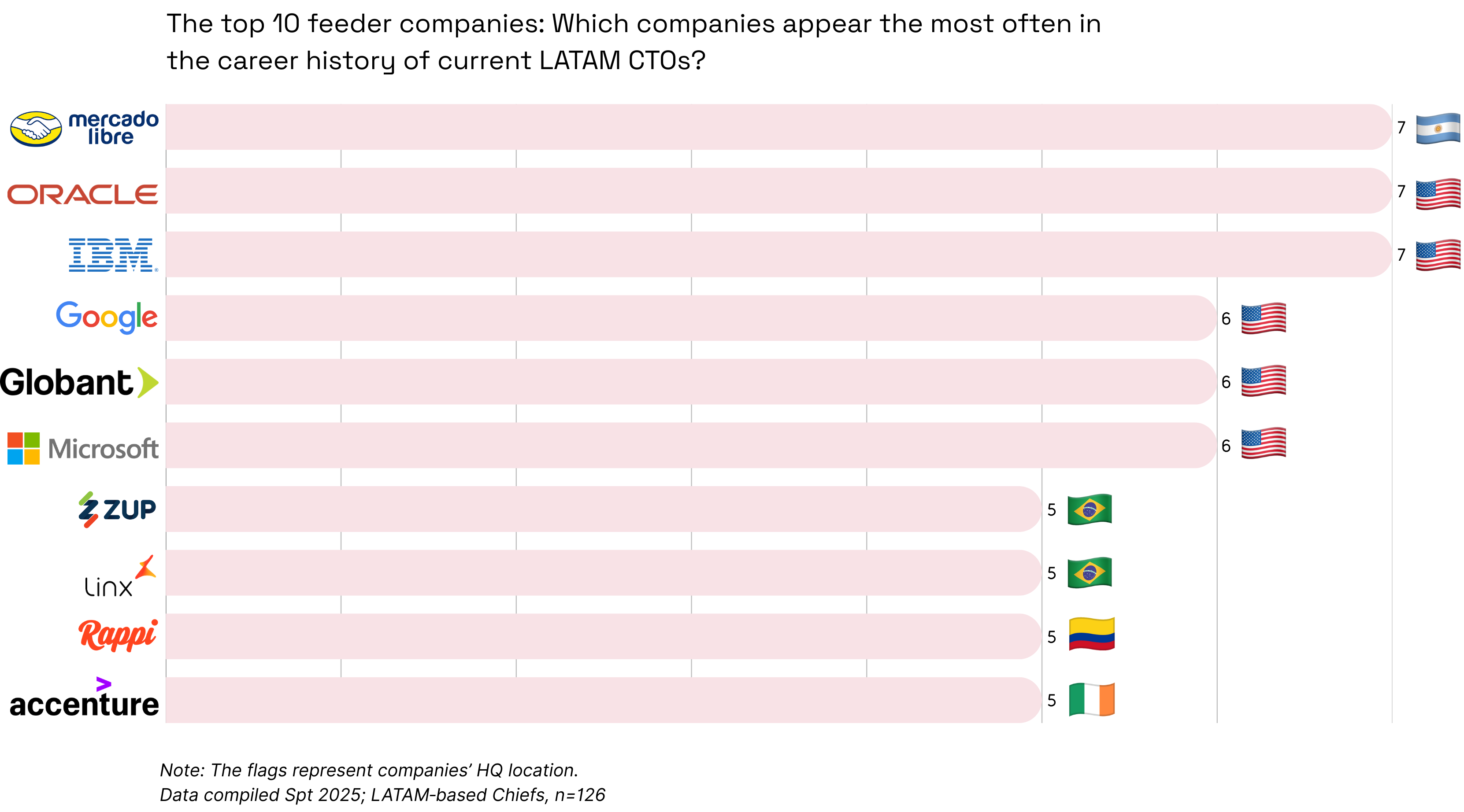
And if you’re looking for where tomorrow’s LATAM CTOs will be trained, the top feeders are Mercado Libre, Oracle, and IBM.
Mercado Libre naturally tops the leaderboard. As Latin America’s largest and most valuable company, it employs thousands of engineers and makes it a natural training ground for future tech leaders.
The same logic applies to Oracle, IBM, Google, and Microsoft. Each has invested heavily in the region with local R&D hubs and research labs. Together, these companies provide the kind of scale and exposure that shapes senior technology leaders.
And then you also have established homegrown category leaders and regional super-platforms with big engineering orgs of their own. They’ve become just as important in producing the next generation of CTO talent.

Conclusion: What you can take from this
You can read our mapping this way:
Brazil, anchored by São Paulo, concentrates leadership. A smaller share also comes from the US-based diaspora.
Most CTOs fall into the 1–3-year tenure window, reflecting funding ups and downs that reshuffled leadership teams.
The pool is seasoned and leans toward software because that is where value pools sit.
These tech executives aren’t first time CTO/CPTOs and have already a similar role in the past.
The top feeder companies are a mix of U.S. tech giants, established homegrown category leaders, and regional super-platforms.
If you want us to map another region next, tell us where to look.
And if this kind of mapping speaks to you, if you’re curious about how we built it, or if you’re hiring a Tech leader, let’s talk. learco@thebigsearch.com